

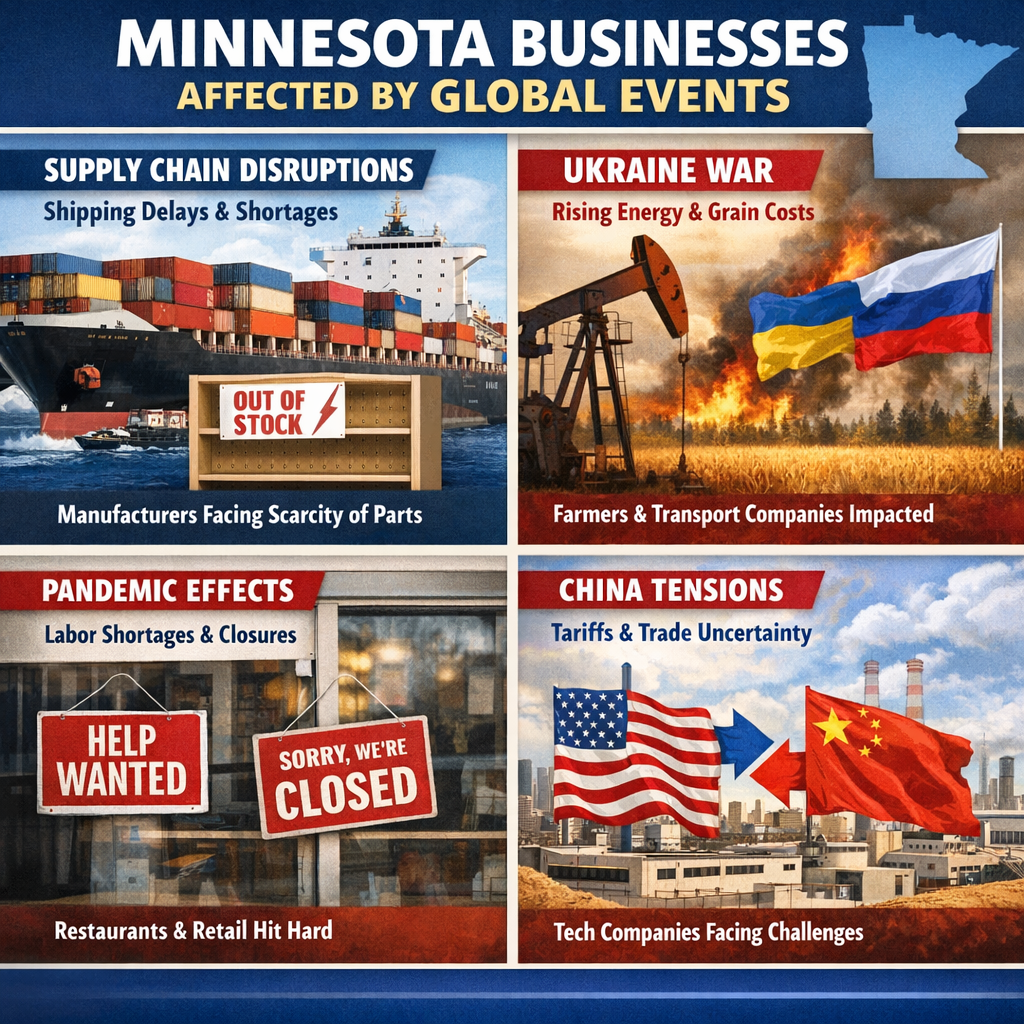
In our interconnected world, global events often have direct and significant effects on local economies, including here in Minnesota. Recent international developments have underscored the importance of understanding these connections.
Decline in Exports
In the second quarter of 2025, Minnesota experienced a notable decline in exports, with a $1.3 billion decrease compared to the same period in 2024. This 19% drop was largely attributed to a significant reduction in mineral fuel and oil exports to Canada, which fell by 96%, amounting to a $703 million decrease. Additionally, exports to Mexico and China, Minnesota’s second and third largest markets, declined by over 20% each. These figures highlight the state’s sensitivity to global market fluctuations and trade policies.
Immigration Enforcement and Economic Disruption
In early 2026, the federal government’s Operation Metro Surge brought thousands of Immigration and Customs Enforcement (ICE) agents to Minnesota, leading to widespread economic disruption. The increased federal presence caused reduced foot traffic, staffing challenges, and lost revenue, particularly affecting immigrant-owned businesses. Governor Tim Walz emphasized the toll on small businesses, noting that fear and uncertainty were undermining the hard work of business owners and impacting the broader economy.
Meet Minneapolis, the city’s tourism organization, reported that 80% of surveyed partners experienced canceled, postponed, or reduced bookings or sales due to the ICE surge. Furthermore, 90% of partners indicated that fear or stress was affecting operations, and 72% reported staffing absenteeism. These statistics underscore the profound impact that federal immigration enforcement can have on local economies.
Community and Cultural Resilience
Despite these challenges, Minnesota’s communities have demonstrated resilience and a commitment to cultural engagement. Events like the International Festival of Minnesota, held in April 2026, celebrated the state’s cultural diversity and global connections. The festival featured participation from 67 nations and ethnic communities, offering global cuisine, artisan goods, and music and dance performances. Such events not only foster understanding but also contribute to the local economy by attracting visitors and supporting local businesses.
Organizations like Global Minnesota continue to provide platforms for dialogue and engagement on international issues, offering events and programs that connect Minnesotans to global perspectives. These initiatives play a crucial role in maintaining Minnesota’s global outlook and economic vitality.
Conclusion
Global events have tangible effects on Minnesota’s economy, influencing export markets, local businesses, and community dynamics. Staying informed about international developments and fostering cultural engagement are essential for navigating these challenges and ensuring the state’s continued economic resilience.